






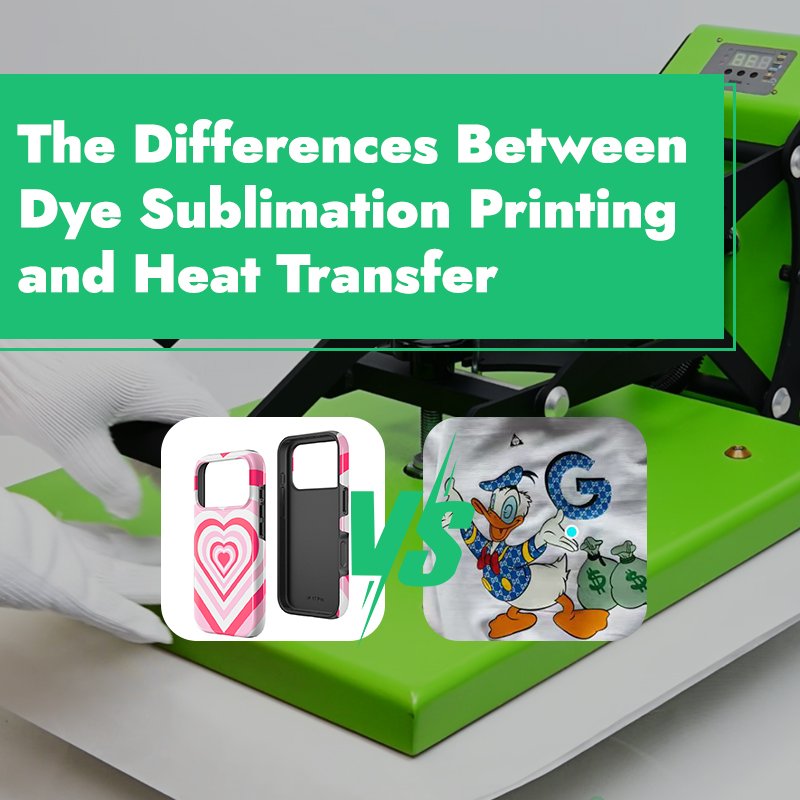
Customizing apparel, mugs, and other items has never been easier, thanks to printing techniques like dye sublimation and heat transfer. Whether you’re a small business owner, a hobbyist, or a professional printer, choosing the right method for your project is crucial. Both dye sublimation and heat transfer offer unique benefits, but they differ significantly in process, applications, and results. In this blog, we’ll break down the key differences between these two popular printing methods to help you decide which one suits your needs best.
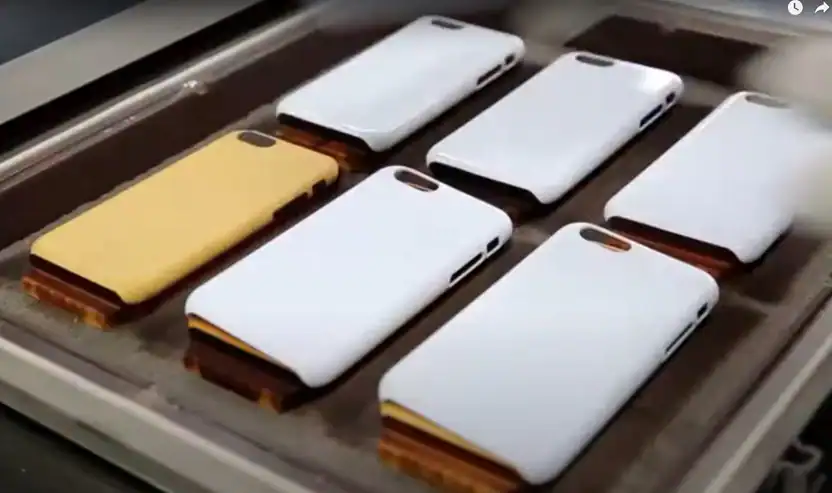
What is Dye Sublimation Printing?
Dye sublimation printing is a process where solid dye turns into a gas under heat and pressure, bonding directly with polyester fabrics or polymer-coated surfaces. This creates vibrant, long-lasting designs that become part of the material itself.The Process
- A design is created digitally and printed onto special transfer paper using sublimation inks.
- The transfer paper is placed onto the substrate (e.g., a polyester T-shirt or a coated mug).
- A heat press applies high temperature and pressure, causing the dye to turn into a gas and penetrate the material’s surface.
- Once cooled, the design is permanently embedded, leaving a smooth, durable finish.
Common Applications
- Apparel: Polyester-based sportswear, jerseys, and all-over printed T-shirts.
- Hard Surfaces: Mugs, phone cases, metal panels, and ceramic tiles.
- Signage: Banners and flags made from polyester fabrics.
Key Characteristics
- Produces vibrant, full-color designs with smooth gradients.
- Prints are durable, fade-resistant, and integrated into the material.
- Limited to polyester fabrics or polymer-coated surfaces.
What is Heat Transfer?
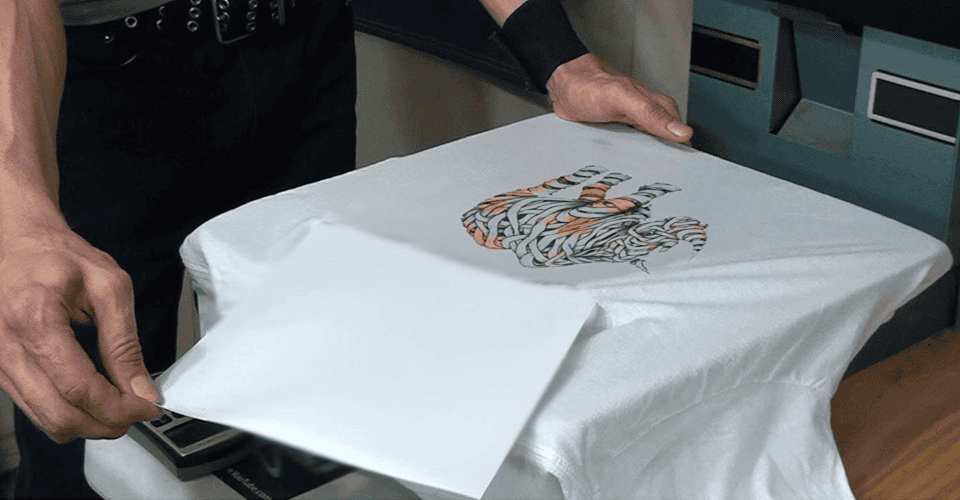
Heat transfer, also known as heat press printing, involves applying pre-printed designs or vinyl sheets onto a substrate using heat and pressure. It’s a versatile method suitable for a wide range of materials and projects.The Process
- A design is printed onto transfer paper (using an inkjet or laser printer) or cut from vinyl sheets using a cutting machine.
- The design is placed onto the substrate (e.g., a cotton T-shirt or a tote bag).
- A heat press applies heat and pressure to adhere the design to the material’s surface.
- Once cooled, the design is fixed, though it may sit on top of the material rather than being fully integrated.
Common Applications
- Apparel: T-shirts, hoodies, and hats made from cotton, polyester, or blends.
- Promotional Items: Tote bags, aprons, and other accessories.
- Custom Projects: Small-batch or one-off designs for events or gifts.
Key Characteristics
- Works on a variety of materials, including cotton and blends.
- Prints may feel layered or raised on the surface.
- Ideal for solid-color designs or simpler graphics, especially with vinyl.
Key Differences Between Dye Sublimation and Heat Transfer
To make it easier to compare these two methods, here’s a quick-reference table highlighting their key differences:
|
Aspect
|
Dye Sublimation
|
Heat Transfer
|
|---|---|---|
|
Material Compatibility
|
Polyester fabrics or polymer-coated surfaces only
|
Cotton, polyester, blends, and other materials
|
|
Print Quality
|
Vibrant, full-color, seamless integration
|
Solid colors or simpler designs; may feel raised
|
|
Durability
|
Highly durable; no cracking or fading
|
May peel or crack over time with wear
|
|
Color Capabilities
|
Excellent for complex, full-color designs
|
Best for solid colors or less intricate designs
|
|
Cost
|
Higher setup costs; better for bulk orders
|
Lower setup costs; ideal for small runs
|
|
Equipment
|
Sublimation printer, inks, heat press
|
Standard printer, vinyl cutter, heat press
|
Detailed Comparison
- Material Compatibility: Dye sublimation is restricted to polyester or polymer-coated items, making it less versatile but ideal for specific applications like sportswear. Heat transfer works on a broader range of materials, including cotton and blends, making it a go-to for diverse projects.
- Print Quality and Durability: Dye sublimation produces vibrant, embedded prints that withstand washing and wear without cracking. Heat transfer prints, especially vinyl, may feel like a layer on the material and can peel or fade over time, depending on the quality and care.
- Color and Design Capabilities: Dye sublimation excels at reproducing detailed, full-color designs with smooth gradients, perfect for all-over prints. Heat transfer is better suited for solid colors or simpler designs, particularly when using vinyl for logos or text.
- Production Speed and Cost: Dye sublimation requires specialized equipment and inks, leading to higher upfront costs but cost-efficiency for large orders. Heat transfer is more affordable for small-scale or one-off projects, as it uses standard printers or vinyl cutters.
- Equipment Requirements: Dye sublimation demands a sublimation printer, specific inks, and a heat press, which can be a barrier for beginners. Heat transfer can be done with a standard printer, transfer paper, or a vinyl cutter, making it more accessible.
When to Choose Each Method
Choosing between dye sublimation and heat transfer depends on your project’s goals, materials, and budget. Here’s a quick guide:
- Choose Dye Sublimation if you’re:
- Producing high-volume apparel, like team uniforms or sportswear.
- Working with polyester fabrics or polymer-coated hard surfaces (e.g., mugs, phone cases).
- Aiming for vibrant, long-lasting, full-color designs.
- Example: Creating all-over printed polyester jerseys for a sports team.
- Choose Heat Transfer if you’re:
- Working on small-scale or one-off projects, like personalized T-shirts or event merchandise.
- Using a variety of materials, including cotton or blends.
- Looking for a cost-effective solution with minimal setup.
- Example: Printing a custom logo on a cotton T-shirt for a family reunion.
Conclusion
Dye sublimation and heat transfer are both powerful tools for creating custom designs, but they cater to different needs. Dye sublimation shines for vibrant, durable prints on polyester or coated surfaces, making it ideal for high-volume or professional-grade projects. Heat transfer, on the other hand, offers versatility and affordability, perfect for small runs or mixed-material items. By understanding your project’s requirements—material, design complexity, durability, and budget—you can choose the method that delivers the best results.Have you tried either of these printing methods? Share your experiences or ask questions in the comments below, and let us know which technique you’re excited to explore!